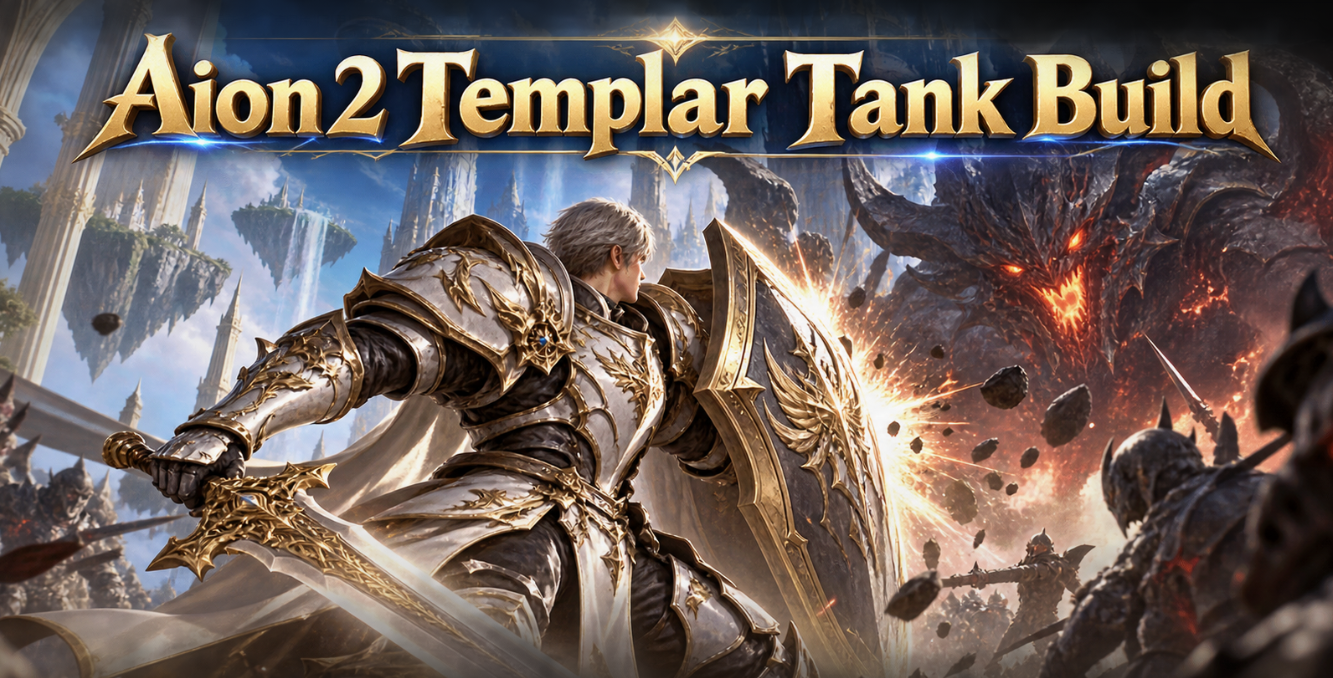
The Templar is the dedicated tank of Aion 2, built around a sword-and-shield playstyle, strong defense, threat control, and party protection. A good Templar does much more than simply absorb damage. You are responsible for keeping enemies in the right position, controlling their attention, and making dangerous mechanics easier for the rest of the party to handle.
For new players, the biggest mistake is usually putting too much emphasis on damage. A tank with slightly lower damage but reliable threat, good positioning, and properly timed defensive skills is far more valuable in a dungeon.
Templar Skill Priority
When leveling a Templar, focus your skill points on the abilities that directly support your tanking core.
A practical priority is:
- Judgment – One of the most important offensive skills in the Templar kit.
- Punishment – Provides strong offensive value while supporting your overall combat performance.
- Pummel – Useful for maintaining pressure and threat during regular combat.
- Warding Strike – Important for the shield-based combat cycle and triggering Judgment windows.
- Shield Smite – Another key shield skill that supports your damage and threat rotation.
- Fury – Extremely important for the Templar’s defensive and party-support role.
- Poach – Valuable for pulling enemies and controlling targets.
- Emergency defensive skills – Prioritize these before unnecessary damage upgrades when preparing for difficult dungeons.
The exact skill specialization can be adjusted as your character develops, but the basic idea remains the same: establish reliable threat first, then improve mitigation and damage.
When upgrading skills and equipment, do not spend all your Aion 2 Kinah simply chasing damage. HP, defense, block, and other defensive improvements have much greater value when your main goal is dungeon tanking.
How to Maintain Threat
Threat management should begin before the first major attack. Give yourself enough time to establish control before the party unloads every offensive cooldown.
Against a boss, open with your main threat tools and keep your target facing away from the group. Continue your normal skill cycle instead of waiting for threat to become a problem.
For groups of enemies, use your pull and control abilities to bring enemies into a manageable position. Once the pack is stable, maintain threat across the group rather than focusing entirely on one target.
If a DPS player pulls an enemy away from you, do not immediately run across the entire room. Reposition when necessary, use your control tools, and keep the fight in a location where the healer can safely support everyone.
Defensive Skill Management
A Templar’s survival depends heavily on timing rather than simply having a large HP pool.
Do not activate every defensive ability at the beginning of a fight. Most bosses have predictable attacks, and your strongest defensive tools should be saved for those moments.
A simple defensive approach is:
Normal damage → block and regular mitigation → predictable heavy attack → major defensive cooldown → emergency recovery
Blocking is particularly important because it is closely tied to the Templar’s party utility. Successful blocks can contribute to Fury and improve the group’s overall combat performance, making defensive play useful for more than simply reducing incoming damage.
You should also avoid overlapping several major defensive cooldowns unless the encounter genuinely requires it. Spreading them across different damage windows usually gives you more control throughout a long fight.
Dungeon Positioning Rules
Positioning is one of the easiest ways to improve as a Templar.
Keep the boss facing away from the party. This protects DPS players and the healer from frontal attacks whenever possible.
Move with a purpose. Do not constantly turn or drag the boss around. Move when a mechanic requires it, when the current location becomes dangerous, or when the party needs a safer position.
Re-center after mechanics. Once the dangerous attack is finished, return the boss to a stable position so melee DPS and the healer can settle back into their normal positions.
Watch the healer’s position. A tank can survive a mistake that a healer cannot. If you drag the boss behind a wall or too far away, the party may suddenly lose healing support.
Surviving Boss Mechanics
Learning dungeon mechanics is more important than memorizing a perfect rotation.
Before a difficult boss fight, identify which attacks can cause a major damage spike. Those are the mechanics you should prepare defensive cooldowns for.
Keep some form of emergency response available whenever possible. If you spend every defensive ability on routine damage, a sudden boss mechanic can leave you with nothing.
It is also important to recognize when you should stop attacking. If a mechanic requires movement, prioritize survival and positioning immediately. Finishing one more attack is rarely worth losing control of the encounter.
Common Templar Mistakes
New Templars often make the same mistakes:
- Using every defensive cooldown at once.
- Turning the boss toward the party.
- Moving too much during normal attacks.
- Chasing every loose enemy instead of controlling the main group.
- Ignoring the healer’s position.
- Focusing on personal DPS while threat is unstable.
- Saving defensive skills until after the dangerous attack has already landed.
- Spending too many resources on offensive upgrades before building a reliable tank setup.
As your character becomes stronger, buy Aion 2 Boosting may help players progress faster, but faster progression does not replace learning boss patterns and tank positioning. A Templar who understands mechanics will usually perform better than one with stronger gear but poor cooldown management.
The best Templar players make dungeon fights feel simple for everyone else. Establish threat early, keep bosses facing the correct direction, block important attacks, rotate defensive skills, and move only when necessary.
Once these habits become automatic, you can start adding more damage to your rotation without sacrificing your main responsibility. The goal is not to become the highest-DPS player in the party. Your goal is to create a stable fight where everyone else can perform at their best.